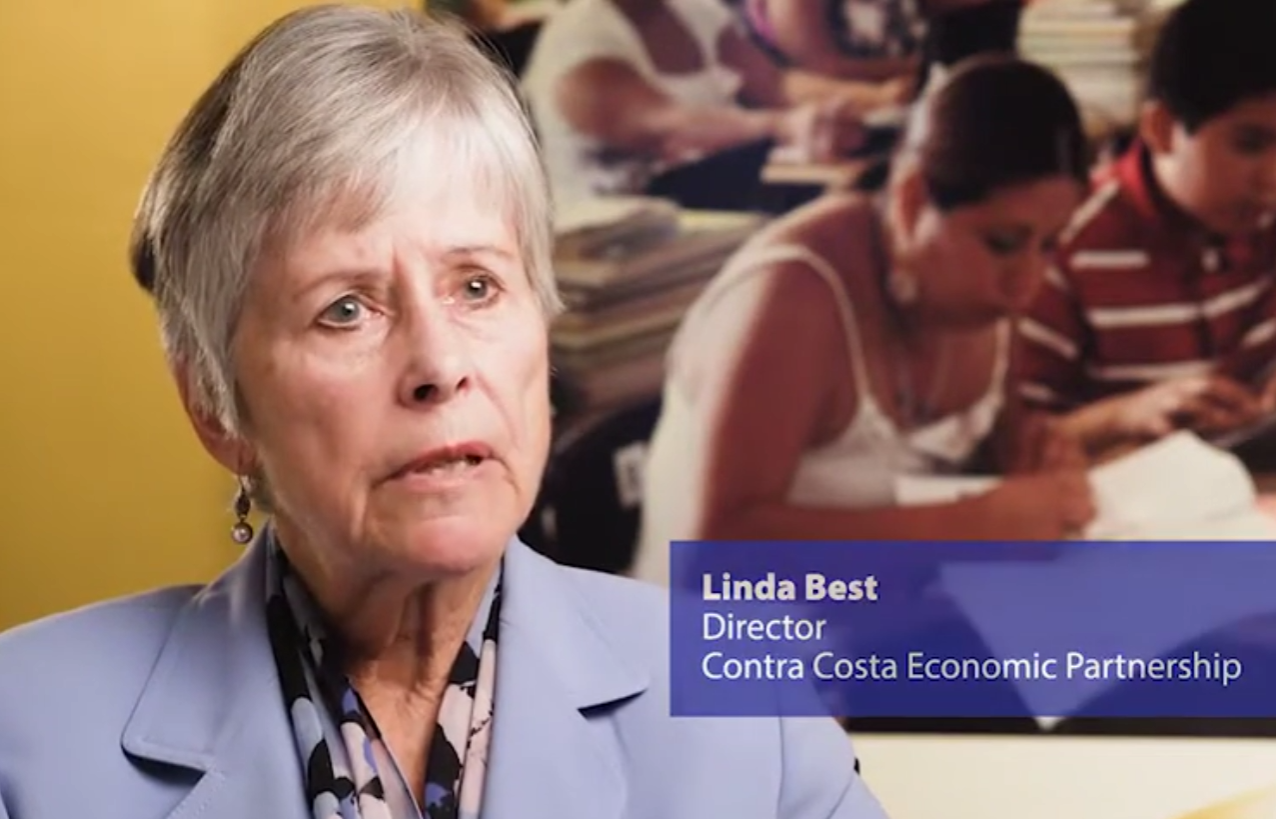
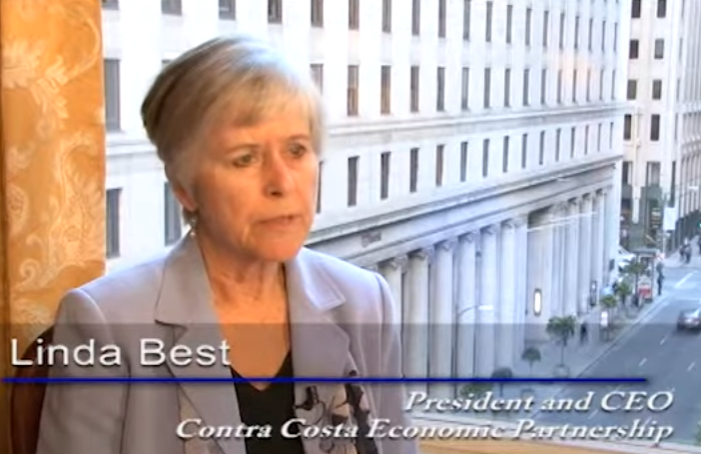
President & CEO, Contra Costa Council · 2011 California Woman of the Year · Stanford Graduate
"It's an opportunity to network with other business leaders and public officials who are decision-makers in our community. That's what the council is all about: to shape public policy in a way that supports economic vitality and our quality of life."
From Stanford graduate to regional leader, Linda's path was shaped by excellent education, family values, and inspiration from women leaders who showed what was possible.
Linda Best's commitment to community service was woven into her family's fabric. "It was always a tradition with my parents, and my husband and I shared that commitment," she reflects. This multi-generational dedication to civic participation created a foundation for a lifetime of leadership that would span five decades and transform Contra Costa County.
Bachelor of Arts (BA), Stanford University
Master of Arts (MA), Stanford University
Linda's advanced education at one of the nation's premier universities provided the analytical skills, strategic thinking, and confidence to lead complex organizations and shape regional policy for decades to come.
Inspired by Women Leaders: Linda was deeply inspired by women she admired, particularly Sunne McPeak, who would go on to serve 15 years as Contra Costa County Supervisor. "The examples set by women I admire, e.g. Sunne McPeak," Linda noted when describing what motivated her involvement in women's issues. These role models showed that women's voices and expertise were not just welcome—they were essential.
First Steps in Politics (1976): Linda's first political involvement came in 1976, working on Eric Hasseltine's campaign for County Supervisor. She worked alongside a fellow volunteer named Sunne McPeak. While Sunne would go on to elected office, Linda chose a different path—building the infrastructure, organizations, and collaborative networks that would enable dozens of leaders to succeed over the next 50 years.
From 2004 to 2013, Linda Best served as the President and CEO of the Contra Costa Council and Executive Director of the Contra Costa Economic Partnership—transforming regional collaboration and expanding organizational impact from one county to the entire East Bay.
The Role: In 2004, Linda became President and CEO of the Contra Costa Council, a coalition of business, education, public, and nonprofit leaders. Simultaneously, she served as Executive Director of the Contra Costa Economic Partnership. For nine years, she was the driving force behind regional economic development and public policy advocacy.
Transforming the Organization: When Linda took the helm, the Contra Costa Council was primarily a business organization focused on one county. By 2013, she had transformed it into an inclusive coalition bringing together business, labor, education, healthcare, and nonprofit sectors across the entire East Bay. The organization's scope had expanded so dramatically that it was renamed the East Bay Leadership Council—a testament to Linda's regional vision and collaborative leadership.
Upon Linda's retirement in 2013, journalist Tom Barnidge wrote: "The Contra Costa Council has played so many meaningful roles—engine for economic development, public policy advocate, informed decision-making voice—that it's difficult to overstate its importance to the community... That stands as testament to the leadership of President Linda Best, who will retire this month after serving the past nine years as the heartbeat of the organization."
Policy Leadership & Advocacy: Linda led volunteer task forces on complex regional issues including healthcare policy, land use planning, social responsibility, workforce development, environmental protection, and economic vitality. She guided position papers and advocacy strategies on CEQA reform, Delta ecosystem preservation, Plan Bay Area, and biotech/healthcare sector development.
Sacramento Advocacy: Linda wasn't afraid to hold power accountable. In 2012, when state legislators were months late in balancing California's budget, Linda and colleague Angie Coffee traveled to Sacramento to confront elected officials. They argued that no one should be paid until the budget was complete. When legislators protested this would be "blackmail," the women calmly replied it would simply be "a reminder you have a job to do."
Brought together 500+ leaders from business, labor, education, healthcare, and nonprofit sectors—proving that collaborative, multi-stakeholder approaches create greater regional impact than siloed efforts.
Expanded organizational scope from Contra Costa County to entire East Bay region, leading to 2013 renaming as East Bay Leadership Council. This geographic expansion reflected her strategic vision and ability to build partnerships beyond traditional boundaries.
Led development of influential position papers and advocacy strategies on major regional issues: economic development, environmental protection, healthcare access, workforce training, and land use planning.
Upon retirement, honored with the organization's highest recognition—the Contra Costa Council Medal Award—for nine years of transformational leadership and tireless dedication to regional economic vitality and quality of life.
Leadership Legacy: As Tom Barnidge concluded in his 2013 tribute: "The new East Bay Leadership Council will carry on, just as the Contra Costa Council did before. But anyone who's met Linda Best knows she will be missed." The organization Linda built continues to shape regional policy today, a lasting testament to her vision and leadership.
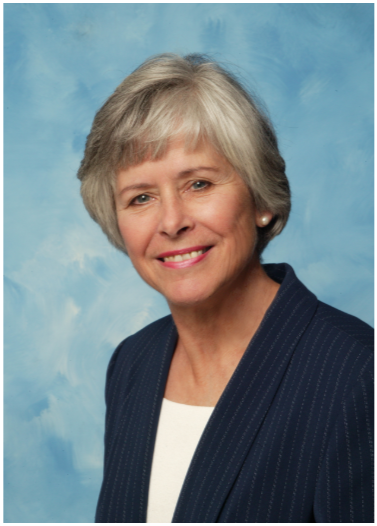
Colleagues describe Linda as the calm, principled force whose humility masks an extraordinary ability to get things done. Her thoughtful, collaborative approach has earned deep respect across sectors and generations.
Linda's approach to leadership combines: Deep policy knowledge with accessible communication. Strategic thinking with practical implementation. Principled positions with collaborative relationships. Quiet confidence with tireless work ethic. Her colleagues consistently describe someone who leads not through self-promotion but through sustained excellence, relationship-building, and an unwavering commitment to regional prosperity and quality of life for all residents.
Fifty years of sustained leadership—from campaign volunteer in 1976 to 2025 award recipient—demonstrating how one woman's commitment to collaboration and public service can shape an entire region's trajectory.
Linda's first political involvement came working on Eric Hasseltine's campaign for Contra Costa County Supervisor. She worked alongside fellow volunteer Sunne McPeak—beginning a 50-year friendship and collaboration. This experience taught Linda the power of grassroots organizing and collaborative campaign work.
At age relatively young for such appointments, Linda was named one of six commissioners to the San Ramon Valley Area Planning Commission. This role gave her deep exposure to land use policy, regional planning, and the intersection of development and quality of life—themes that would shape her career.
Elevated to Chair of the San Ramon Valley Area Planning Commission, Linda led this important regional body making decisions about growth, land use, and community character in one of the Bay Area's fastest-growing regions. Her leadership balanced development with preservation.
Led wilderness trips for the Sierra Club, introducing people to California's wild places and fostering conservation values through direct experience. This early leadership role combined Linda's passion for environmental protection with community education and outdoor stewardship.
Moved from area planning to county-wide planning authority, serving on the Contra Costa County Planning Commission. This county-level role expanded Linda's influence and deepened her understanding of regional growth challenges, infrastructure needs, and community development strategies.
Served on the board of the Eugene O'Neill Foundation, helping preserve the Nobel Prize-winning playwright's Tao House and supporting arts and culture in the East Bay. Linda's commitment to cultural heritage and arts access complemented her economic development and conservation work.
Ten years of service on the John Muir Health Board, one of the region's premier healthcare systems. Linda helped guide strategic direction, community health initiatives, and organizational growth during a critical period of healthcare transformation in the East Bay.
Elected Board Chair of John Muir Health, leading governance during two crucial years. As Chair, Linda provided strategic oversight for one of Northern California's largest healthcare systems, ensuring quality care access and community health focus for East Bay residents.
Served as Chair of the Contra Costa Workforce Development Board, connecting education, business, and workforce training. Linda championed high school career academies and partnerships bringing employers and educators together to create pathways to economic opportunity.
Appointed President and CEO of the Contra Costa Council, beginning nine years of transformational regional leadership. Linda would lead 500+ business, education, public, and nonprofit leaders in shaping economic development policy and regional collaboration across the East Bay.
Simultaneously appointed Executive Director of the Contra Costa Economic Partnership. Linda held both positions concurrently, leading the region's premier business-public policy organization and its economic development arm with vision and strategic focus.
Honored by the California State Legislature and Women's Caucus as the 15th Assembly District Woman of the Year. Presented by Assemblymember Joan Buchanan, this prestigious recognition celebrated Linda's comprehensive leadership spanning economic development, healthcare, workforce training, and community service. One of only 80 women honored statewide annually.
When California legislators were months late balancing the state budget, Linda and colleague Angie Coffee traveled to Sacramento to confront elected officials. They argued legislators shouldn't be paid until their core job—passing a budget—was complete. Their principled stand demonstrated Linda's fearless advocacy for accountability.
Upon her retirement, Linda was honored with the Contra Costa Council Medal Award—the organization's highest recognition. This honor celebrated nine years of transformational leadership, tireless dedication to regional economic vitality, and successful expansion of the Council's scope and impact.
Under Linda's leadership, the Contra Costa Council's influence had grown so significantly that it was renamed the East Bay Leadership Council, reflecting its regional scope. Tom Terrill succeeded Linda as CEO. The organization she built continues to shape East Bay policy and economic development today.
After retiring from Council leadership, Linda continued serving on multiple nonprofit boards: Opportunity Junction (Founding Board Member, past Chair), STAND! For Families Free of Violence (past Chair), Tech Exchange, John Muir Community Health Fund, and East Bay Regional Park District Advisory Board.
In September 2025, STAND! For Families Free of Violence honored Linda with the Rollie Mullen Leadership Award, recognizing her as a "long time community advocate" with outstanding commitment to survivors of domestic violence. Nearly 50 years after her first campaign work, Linda continues to receive recognition for sustained community leadership.
Behind the titles and timeline entries are real stories of principled leadership, regional transformation, and a 50-year commitment to building infrastructure that enables others to succeed.
In 2012, California faced a familiar crisis: state legislators were months late in balancing the budget, leaving communities and programs in limbo. While many civic leaders complained quietly, Linda Best and her colleague Angie Coffee decided to take action.
The two women traveled to Sacramento and confronted elected officials with a simple but powerful argument: no one should receive their paycheck until the budget was complete. When legislators protested that this would amount to "blackmail," Linda and Angie calmly replied that it would simply be "a reminder you have a job to do."
The exchange perfectly captures Linda's leadership style. As colleague Angie Coffee noted, Linda is "packed full of humility" but never hesitates to speak truth to power when the public interest is at stake. And as Sunne McPeak observed, Linda is "always principled, with little fear of the consequences or what other people will think. It's a very effective way to get things done."
Linda demonstrated that effective advocacy requires both substantive knowledge and moral courage. She combined calm professionalism with fearless accountability—willing to travel to Sacramento, look legislators in the eye, and demand they fulfill their basic responsibilities to California taxpayers and communities.
When Linda Best became President of the Contra Costa Council in 2004, it was primarily a business organization focused on one county's economic interests. Nine years later, when she retired, the organization had been renamed the East Bay Leadership Council—a transformation that reflected the dramatic expansion of scope, influence, and impact under her leadership.
Linda's vision was inclusive and collaborative. She believed that tackling regional challenges required bringing together diverse stakeholders who traditionally worked in silos. Under her leadership, the Council evolved from a business-only group to a coalition welcoming labor, education, healthcare, and nonprofit sectors. This cross-sector approach proved that collaboration creates greater impact than competition.
She led volunteer task forces addressing complex policy issues: CEQA reform, Delta ecosystem preservation, regional planning (Plan Bay Area), workforce development, healthcare access, and biotech sector growth. Each task force brought together people who might disagree on tactics but shared commitment to regional prosperity and quality of life.
By 2013, the Council's geographic influence had expanded from Contra Costa County to the entire East Bay. The name change to East Bay Leadership Council wasn't just rebranding—it recognized that Linda had built something bigger than one county's interests. She had created a regional voice for collaborative problem-solving.
As journalist Tom Barnidge wrote upon Linda's retirement: "The new East Bay Leadership Council will carry on, just as the Contra Costa Council did before." The organization Linda built continues to shape regional economic development and public policy today—a testament to infrastructure that outlasts individuals and serves communities for generations.
In 1976, two women volunteered on Eric Hasseltine's campaign for Contra Costa County Supervisor. Their names were Linda Best and Sunne McPeak. Both were passionate about public service and women's leadership. But their paths would diverge in fascinating ways.
Sunne McPeak went on to elected office herself, serving 15 years as County Supervisor and later in state positions. She became one of the prominent women leaders Linda had admired from the beginning. But Linda chose a different path—one equally important but less visible.
Instead of seeking elected office, Linda built the infrastructure that would help dozens of leaders succeed. She chaired planning commissions that shaped regional growth. She led healthcare boards ensuring community access to quality care. She chaired workforce development boards connecting education and employment. And for nine years, she led the region's premier business-public policy organization, creating collaborative networks that brought leaders together across sectors.
Nearly 50 years after that first campaign in 1976, Linda is still doing it. As a founding board member of Opportunity Junction, she supports job seekers building economic self-sufficiency. As a board member of STAND! For Families Free of Violence (receiving their 2025 Rollie Mullen Leadership Award), she helps survivors rebuild their lives and find their own paths to leadership.
Linda's story teaches a crucial lesson: elected office is one path to impact, but building collaborative infrastructure, supporting institutions, and enabling other leaders may create even broader, more sustained change. For every woman elected to office, there are women like Linda who built the organizations, networks, and support systems that made that election possible—and ensured the elected leader could succeed once in office.
Linda's 50-year career spans regional economic leadership, state recognition, healthcare governance, workforce development, and sustained commitment to creating opportunity and strengthening community across Contra Costa County and the East Bay.
President & CEO, Contra Costa Council (2004-2013) and Executive Director, Contra Costa Economic Partnership. Led 500+ business, education, public, and nonprofit leaders. Transformed organization from county to regional scope, leading to 2013 renaming as East Bay Leadership Council. Honored as 2011 California Woman of the Year by State Legislature. Recipient of 2013 Contra Costa Council Medal Award upon retirement.
BA and MA from Stanford University. Applied advanced education to decades of public policy leadership across planning, economic development, healthcare, and workforce training. Led task forces on CEQA reform, Delta preservation, regional planning, biotech sector development. Sacramento advocacy for budget accountability and legislative responsibility. Strategic thinker combining deep knowledge with collaborative implementation.
John Muir Health Board (1992-2002), including Board Chair (2000-2002). John Muir Community Health Fund Board. 2025 Rollie Mullen Leadership Award from STAND! For Families Free of Violence (past Board Chair). Multiple recognitions: Eugene O'Neill Foundation Open Gate Award, Child Care Council Kiddie Award, East Bay Business Times Woman of Distinction. Congressional Record tribute (2013).
Past Chair, Contra Costa Workforce Development Board. Founding Board Member and past Chair, Opportunity Junction. Current board service: Tech Exchange. Created high school career academy partnerships connecting business and education. Sustained 50-year commitment: from 1976 campaign volunteer to 2025 award recipient. Built collaborative infrastructure enabling hundreds of leaders and thousands of community members to succeed.
It is essential for positive outcomes that our views and expertise are on the table. It has always been important to me that women's voices are heard and valued. We are now more respected and valued for what we bring to the important issues of the day. Stay involved and make a difference!
Explore video interviews, news articles, and official recognition documenting Linda Best's decades of regional leadership and community impact.
Linda Best discusses a decade of partnership in closing California's Digital Divide as Director of Contra Costa Economic Partnership. This 3:53 video showcases her leadership in regional technology equity initiatives. (California Emerging Technology Fund, 2017)
Linda Best speaks at the first-ever Regional Leaders Workshop in San Francisco, discussing strategies to bridge California's digital divide. This early video captures her vision for technology access equity. (California Emerging Technology Fund, 2011)
Tom Barnidge's tribute column captures Linda's nine-year tenure as "the heartbeat of the organization." Features quotes from colleagues describing her as "packed full of humility" and chronicles her extensive board service and community impact. (East Bay Times, May 31, 2013)
Documents the historic transformation of the Contra Costa Council into the East Bay Leadership Council in 2013, reflecting Linda's successful expansion of the organization's regional influence. Includes details about her successor and the organization's growth under her leadership. (Patch, May 23, 2013)
Official recognition entered into the Congressional Record honoring Linda Best for her "committed and diligent service to the citizens of Contra Costa County" upon her retirement as President and CEO. Documents her regional leadership impact at the federal level. (U.S. Congress, June 20, 2013)
Linda Best's current profile as a Founding Board Member of Opportunity Junction, where she continues her commitment to workforce development and economic empowerment. The profile highlights her retired role as CEO of the East Bay Leadership Council and ongoing community engagement.